


Private Pool for Training
The concept of "confined water" means that conditions should be close to ideal: clarity, no currents or waves, a bottom without silt, suitable water temperature, etc. A pool, or in rare cases the sea, meets all these characteristics. It is also necessary to have shallow water where you can stand and be above the water, and it is desirable to have deep water of 2 meters or more for practicing buoyancy skills.
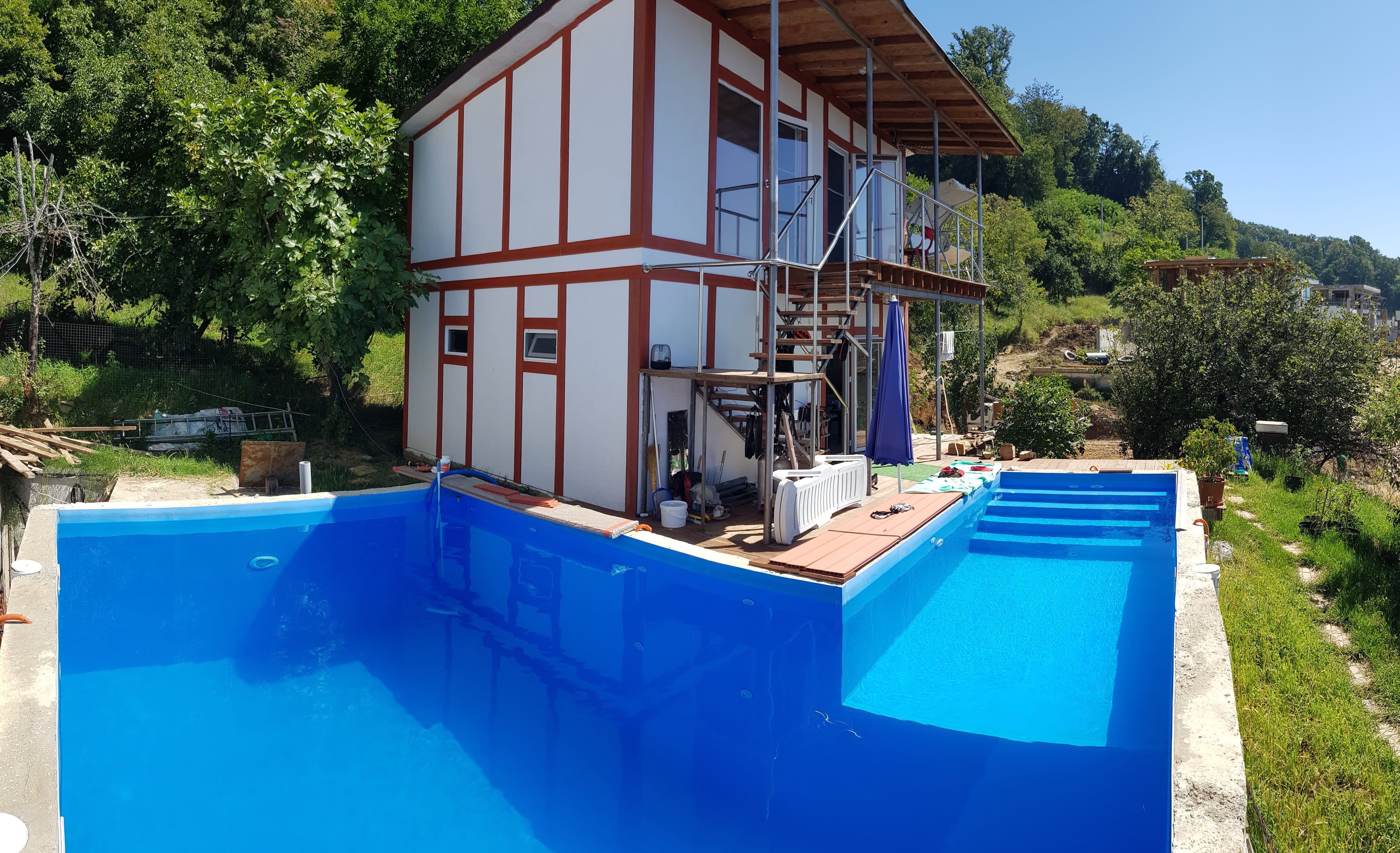
All this was taken into account by me: my pool has two shelf depths – 1.5 m and 3 m deep.
In summer, the sea is often calm, and I conduct courses in the sea when the underwater conditions correspond to "confined water." At sea, there is more space and the ability to choose various depths.
However, there are people who are thrown off by even a small difference from ideal conditions, and their learning process slows down.
In winter, the sea very rarely allows training or practice in the sea, and even the temperature, even in a dry suit, allows for no more than an hour underwater.
As a rule, skill training and practice in a pool are more effective because there are fewer distractions and the student is completely focused on improving their actions.
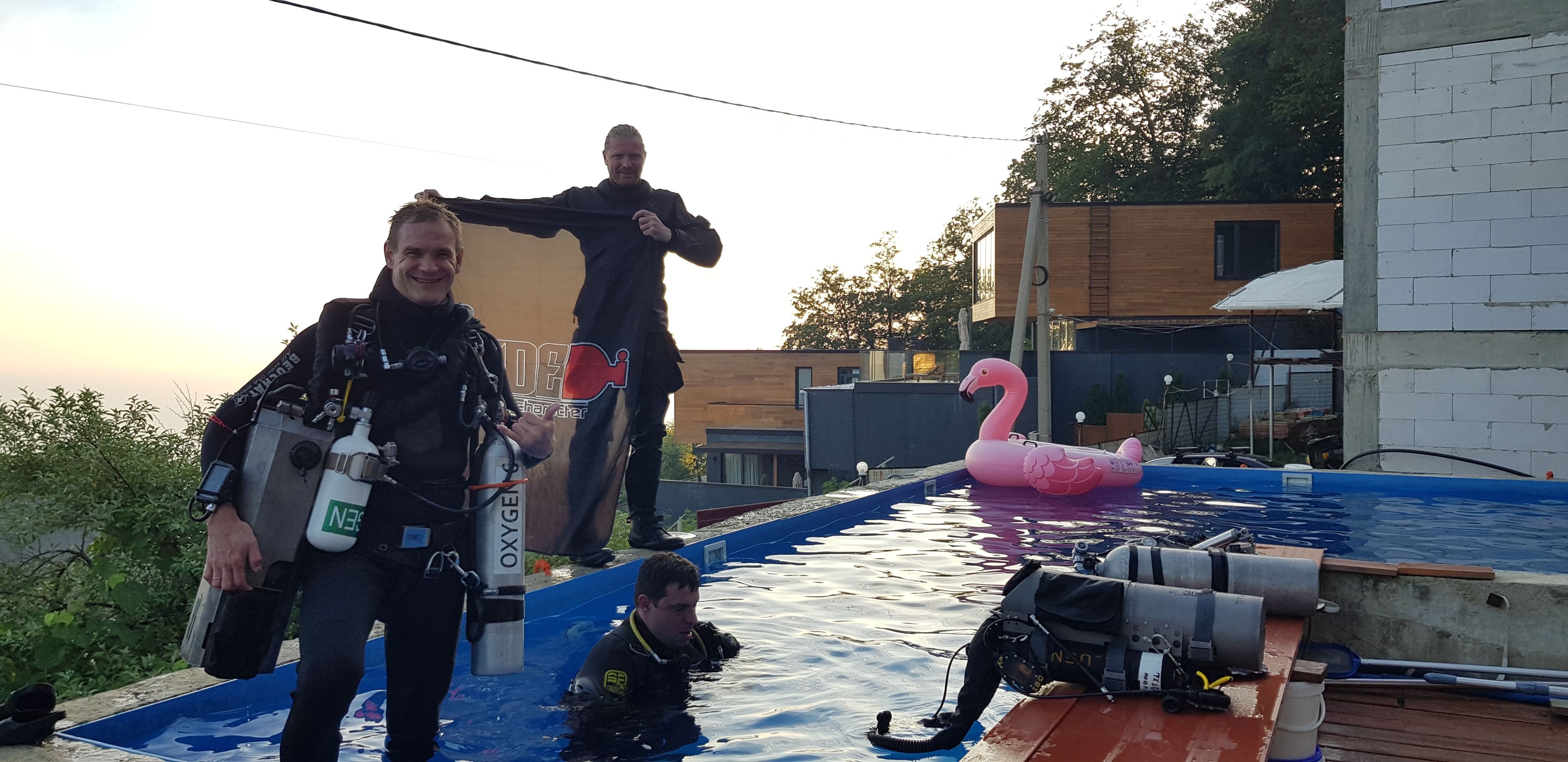
Also, in winter, it is more comfortable to get out of the water and immediately enter a warm room and take a hot shower. The average water temperature in the pool during winter is 12–15°C (53–59°F), but next year I plan to install a water heating system and maintain it at 20–22°C (68–72°F) so that it is comfortable to dive in a wetsuit.
In my pool, it is comfortable for one instructor and two students to dive, and if practicing PADI standards exercises on your knees, you can take 4 students.
For my students and colleagues, I offer the use of my pool for skill practice and conducting courses.
You can find the cost of pool dives at this link. If you have any questions, feel free to call me – I will be happy to answer them! You can also contact me via WhatsApp or the chat at the bottom right of the page.
Private Pool for Training
The concept of "confined water" means that conditions should be close to ideal: clarity, no currents or waves, a bottom without silt, suitable water temperature, etc. A pool, or in rare cases the sea, meets all these characteristics. It is also necessary to have shallow water where you can stand and be above the water, and it is desirable to have deep water of 2 meters or more for practicing buoyancy skills.
All this was taken into account by me: my pool has two shelf depths – 1.5 m and 3 m deep.
In summer, the sea is often calm, and I conduct courses in the sea when the underwater conditions correspond to "confined water." At sea, there is more space and the ability to choose various depths.
However, there are people who are thrown off by even a small difference from ideal conditions, and their learning process slows down.
In winter, the sea very rarely allows training or practice in the sea, and even the temperature, even in a dry suit, allows for no more than an hour underwater.
As a rule, skill training and practice in a pool are more effective because there are fewer distractions and the student is completely focused on improving their actions.
Also, in winter, it is more comfortable to get out of the water and immediately enter a warm room and take a hot shower. The average water temperature in the pool during winter is 12–15°C (53–59°F), but next year I plan to install a water heating system and maintain it at 20–22°C (68–72°F) so that it is comfortable to dive in a wetsuit.
In my pool, it is comfortable for one instructor and two students to dive, and if practicing PADI standards exercises on your knees, you can take 4 students.
For my students and colleagues, I offer the use of my pool for skill practice and conducting courses.
You can find the cost of pool dives at this link. If you have any questions, feel free to call me – I will be happy to answer them! You can also contact me via WhatsApp or the chat at the bottom right of the page.